
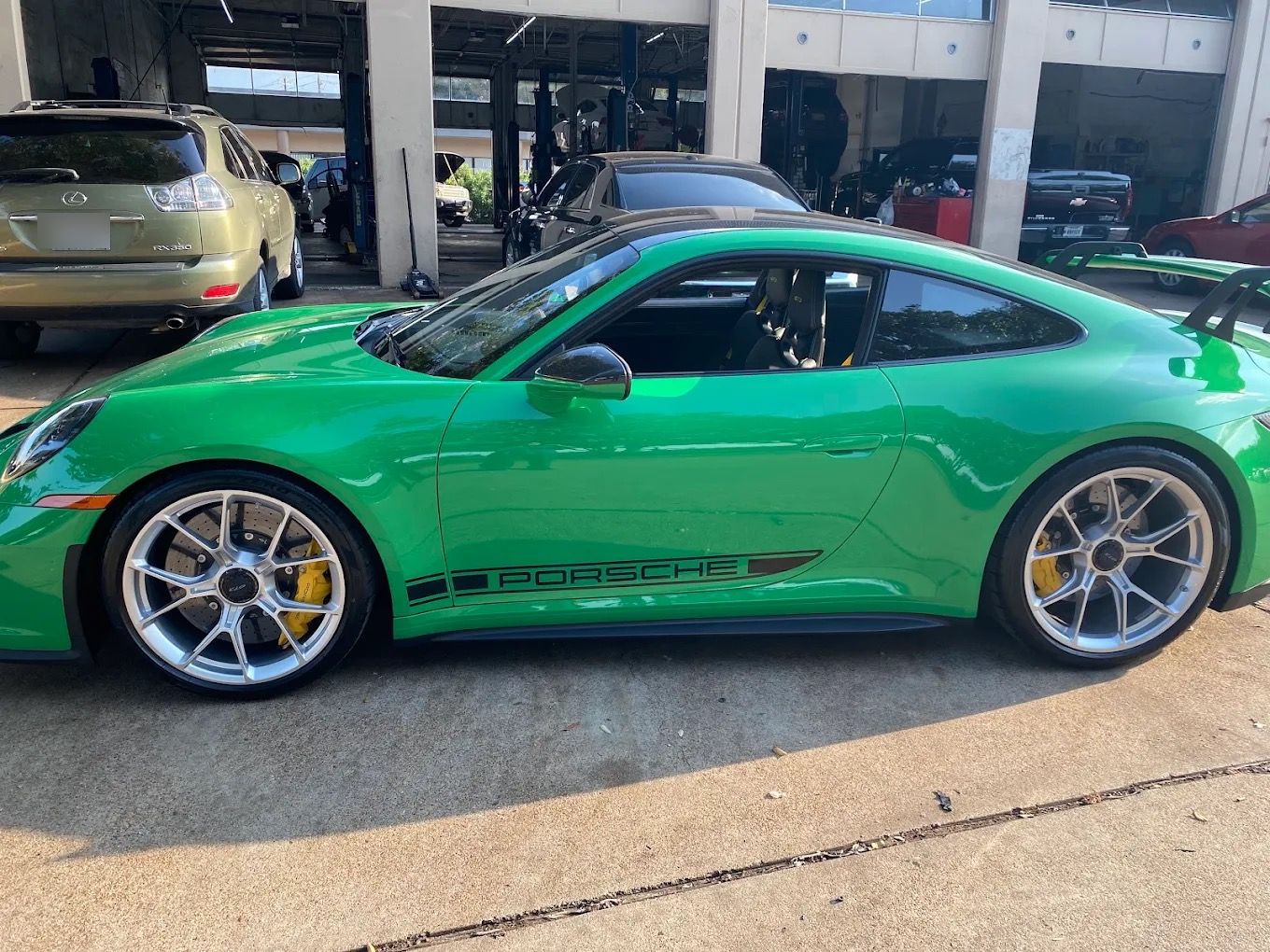
German service intervals were written for German weather. A car that spends July idling in a Sugar Land carpool line is running under what the manufacturer calls "severe service," and the maintenance book quietly assumes you will read the fine print. Most owners never do.
Oil: shorten the interval
Extended 10,000–15,000 mile intervals depend on the oil staying within its temperature window. Sustained heat and stop-and-go driving shear the oil faster and load it with fuel dilution. On direct-injection and turbocharged engines we recommend 5,000–7,500 miles with the exact approved specification (LL-01, MB 229.5, Porsche A40, VW 504/507) — not "European blend."
Cooling systems age early
Plastic radiator end tanks, expansion tanks, and water pumps with composite impellers are the parts we replace most on 8-to-12-year-old BMWs and Mercedes. Heat cycling is the cause. Pressure-testing the system at every oil change catches them before a tow.
Batteries and rubber
Heat, not cold, kills batteries. Expect three to four years here, and have the battery registered to the car when replaced so the charging system adjusts. Belts, hoses, and evaporative-system lines harden and crack on the same schedule.
Brakes and tires
Brake fluid absorbs moisture faster in humidity; flush it every two years without exception. Tire pressures move 1 psi per 10°F — set them cold in the morning, not after the drive over.
We service these cars every day with the factory tools and the approved fluids. Bring the maintenance book; we will show you exactly where yours stands.
Questions about your car?
Call (281) 261-0400 or text (281) 761-4672. 1653 Cartwright Rd, Missouri City — Quail Valley Shopping Center.
Keep reading
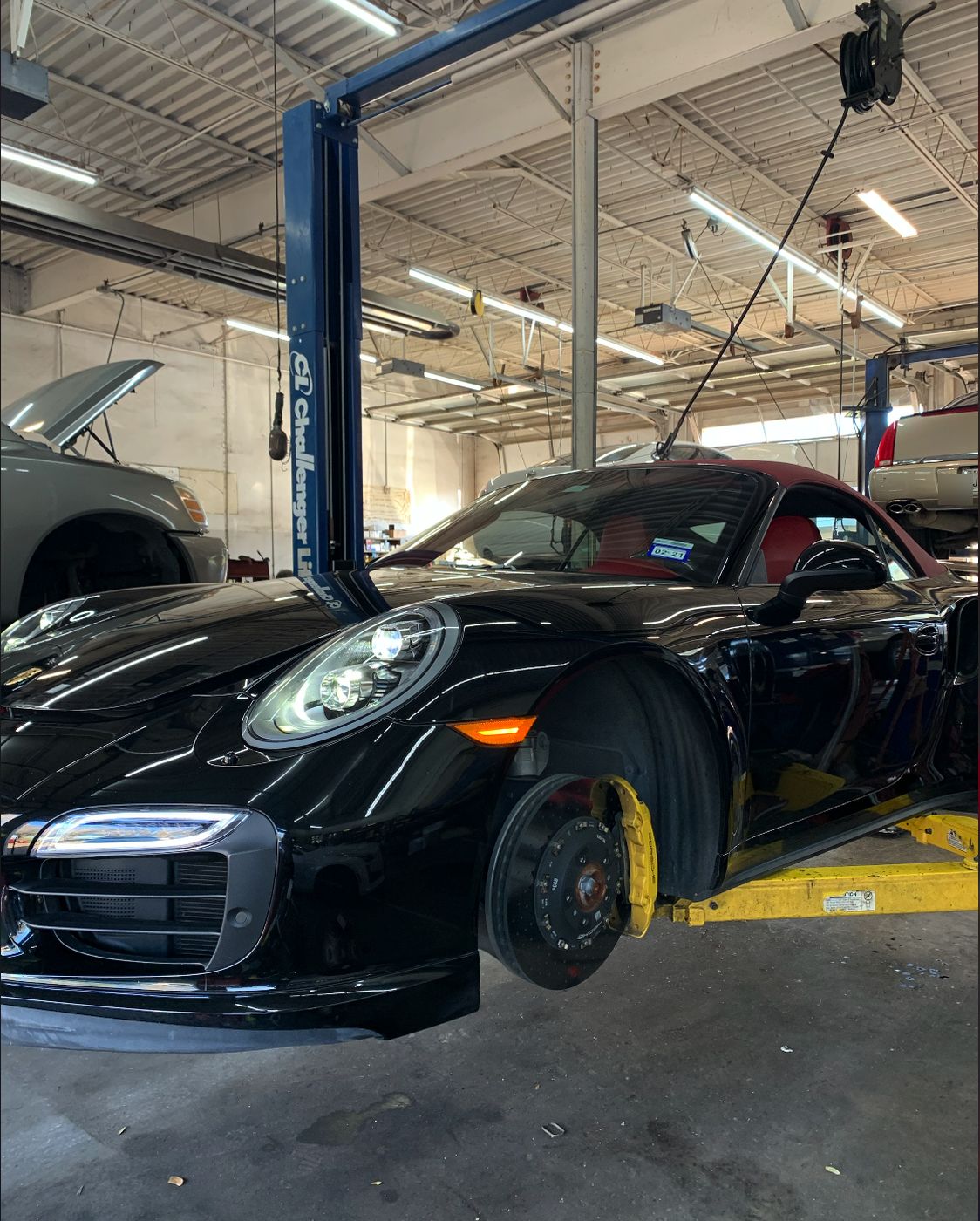
The Check-Engine Light: What It Actually Means (and What It Doesn't)
A steady vs. flashing check-engine light, the most common causes we see in Missouri City, and why a parts-store code read is only the first step.
Read more →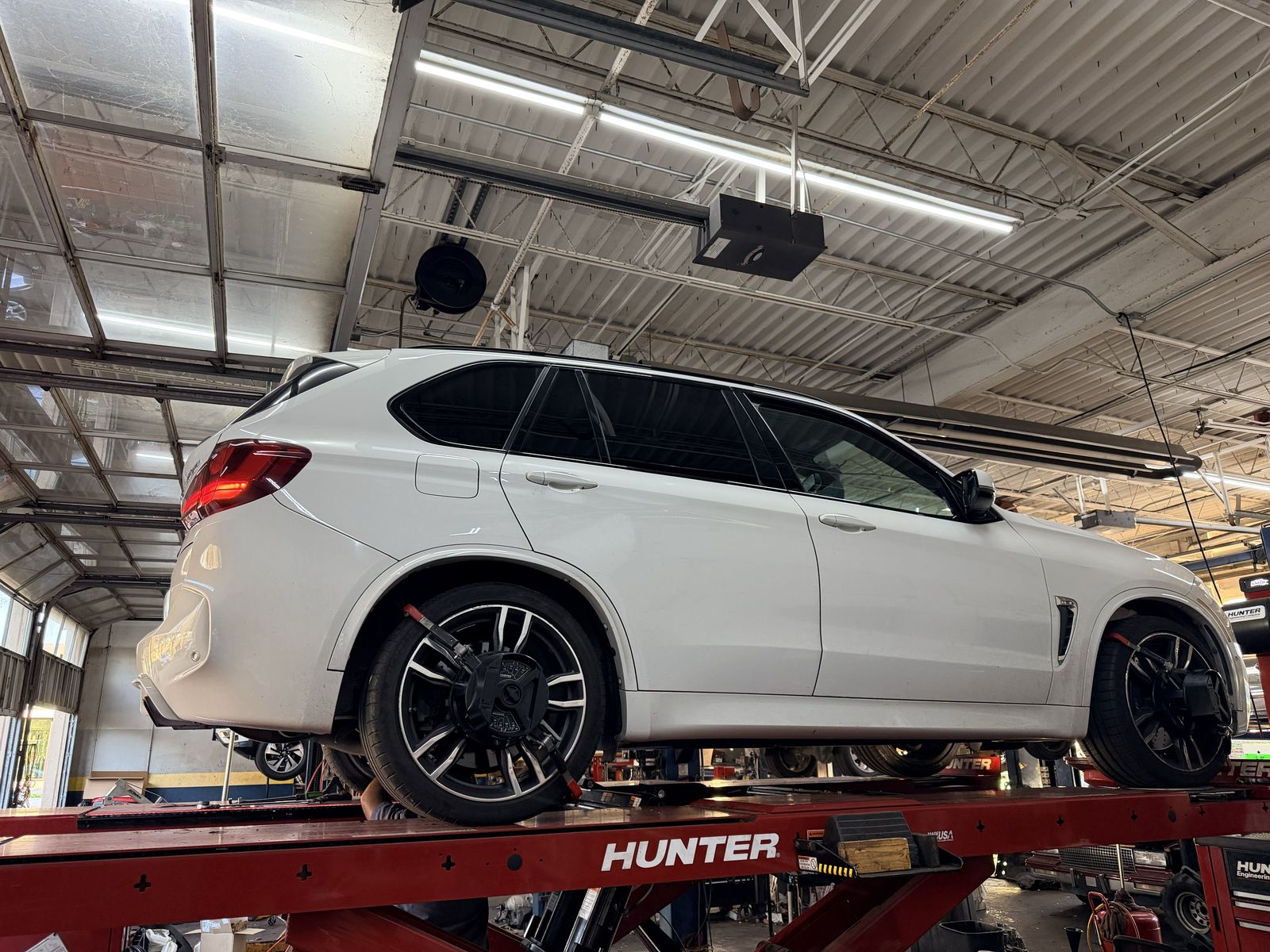
What a Four-Wheel Alignment Actually Does — and When You Need One
Camber, caster, toe, and why a Hunter alignment with a printed before-and-after is the difference between a real alignment and a tire rotation with extra steps.
Read more →